

 首頁 > 最新消息










Screws: Types, Applications, and Selection Considerations
Screws are one of the most widely used fastening components in construction, manufacturing, machinery, electronics, furniture, automotive production, and industrial assembly. Although screws may look simple, their material, thread design, coating, head type, and dimensions can significantly affect fastening strength, durability, and long-term reliability.
Choosing the right screw is not only about size. It also requires understanding the application environment, load requirements, installation method, material compatibility, and corrosion resistance. For industrial buyers, working with a reliable screw manufacturer can help ensure stable quality, consistent specifications, and long-term supply.
目錄
Section 1: What Are Screws?
Why are screws widely used in manufacturing?
Screws are widely used because they are easy to install, removable, cost-effective, and suitable for many materials. They can provide strong mechanical fastening while allowing maintenance, replacement, or disassembly when needed.
In manufacturing, screws support efficient assembly and flexible product design.
How do screws differ from bolts and rivets?
Screws are often designed to create or engage threads directly in a material or pre-threaded hole. Bolts are usually used with nuts or threaded components. Rivets create permanent fastening and usually cannot be removed without damaging the rivet.
The choice between screws, bolts, and rivets depends on load, removability, vibration, and assembly requirements.
What industries rely heavily on screw fasteners?
Screws are used in construction, automotive manufacturing, electronics, appliances, machinery, furniture, renewable energy, medical devices, and industrial equipment. Almost every manufacturing sector uses screws in some form.
Different industries require different screw materials, tolerances, coatings, and strength levels.
Why is screw quality important?
Poor-quality screws may strip, break, loosen, corrode, or fail under load. In industrial applications, screw failure can affect product safety, production efficiency, and maintenance cost.
Stable screw quality helps ensure reliable assembly and long-term product performance.
Section 2: Common Types of Screws
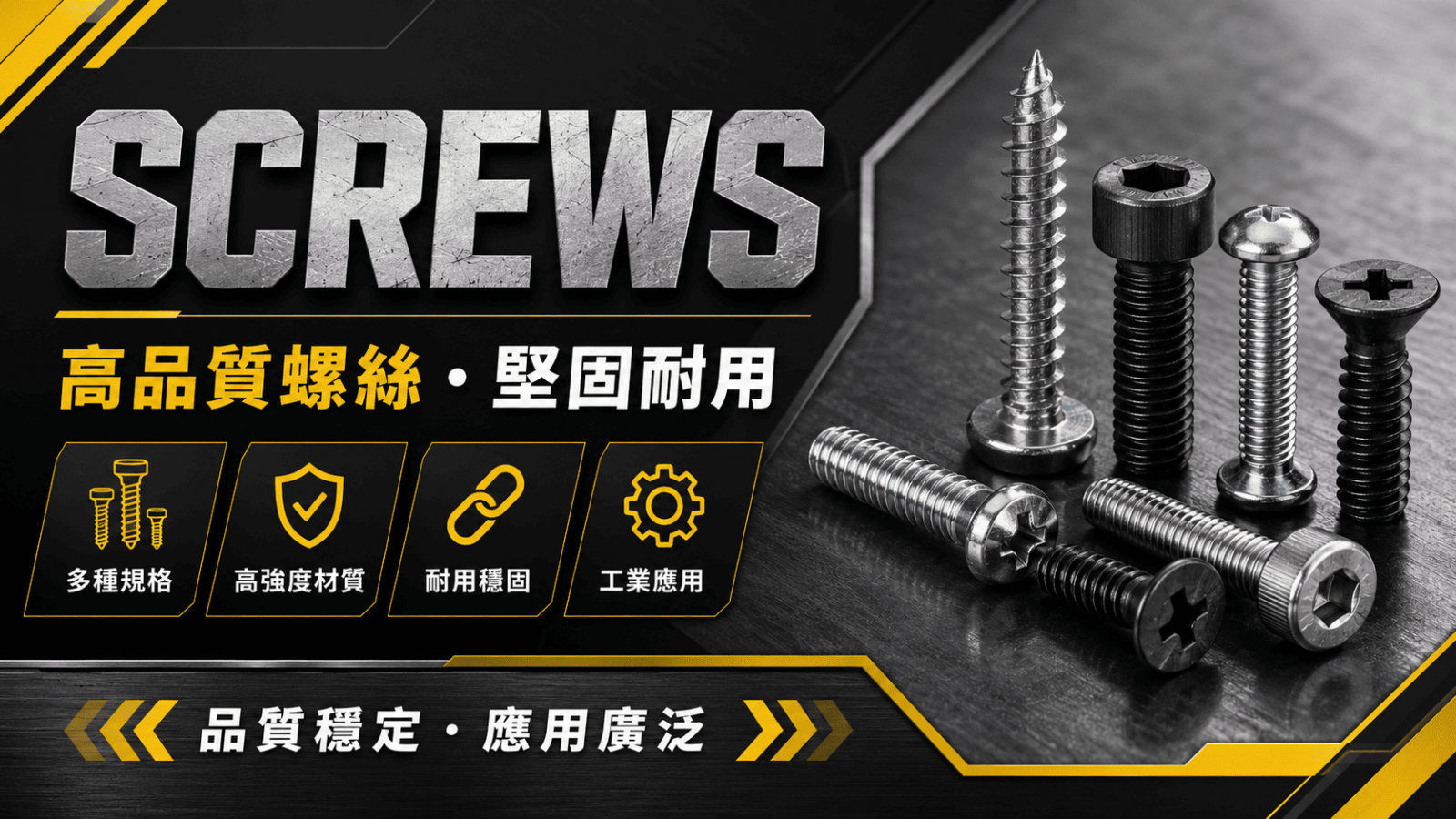
Self-tapping screws
Self-tapping screws can create their own mating thread in materials such as metal, plastic, or wood. They are commonly used when pre-threaded holes are not available.
They are suitable for efficient assembly and repair applications.
Machine screws
Machine screws are typically used with pre-threaded holes or nuts. They are common in machinery, electronics, appliances, and precision equipment.
They are available in many head types, thread sizes, and materials.
Wood screws
Wood screws are designed for fastening wood materials. Their thread shape and tip design help grip wood fibers and provide strong holding power.
They are widely used in furniture, construction, cabinetry, and interior projects.
Self-drilling screws
Self-drilling screws have drill-like tips that allow them to drill into materials and form threads during installation. They are commonly used in metal roofing, steel structures, and construction applications.
They help reduce installation time because pre-drilling may not be required.
Section 3: Materials Used in Screw Manufacturing
Carbon steel screws
Carbon steel screws are common, cost-effective, and suitable for many general applications. They are often coated or plated to improve corrosion resistance.
They are widely used in construction, furniture, and general industrial assembly.
Stainless steel screws
Stainless steel screws offer better corrosion resistance, making them suitable for outdoor, marine, food processing, and humid environments. Common grades include 304 and 316 stainless steel, depending on the application.
They are often selected where rust resistance and appearance are important.
Alloy steel fasteners
Alloy steel screws are used where higher strength, hardness, or mechanical performance is required. They may be heat-treated and coated for specific industrial applications.
They are common in machinery, automotive, and high-load fastening systems.
Specialized coating technologies
Coatings can improve corrosion resistance, wear resistance, lubricity, and appearance. Common treatments include zinc plating, black oxide, nickel plating, phosphate coating, and advanced anti-corrosion coatings.
The right coating depends on the environment and performance requirements.
Section 4: How to Select the Right Screws?
Choosing the correct thread type
Thread type affects holding strength, installation speed, and material compatibility. Coarse threads may work better in wood or softer materials, while fine threads may be suitable for metal or precision applications.
Thread choice should match the base material and load conditions.
Understanding load requirements
Screws must be selected according to tension, shear, vibration, and safety requirements. A screw that works for light assembly may not be suitable for structural or high-load applications.
For critical applications, mechanical strength and standards should be confirmed.
Environmental considerations
Outdoor, coastal, humid, chemical, or high-temperature environments require screws with suitable materials and coatings. If corrosion is likely, stainless steel or specialized coatings may be needed.
Environmental conditions often determine long-term fastening reliability.
Selecting suitable screw dimensions
Length, diameter, head type, drive type, and thread length must match the application. A screw that is too short may not provide enough holding power, while a screw that is too long may damage components or interfere with assembly.
Proper dimension selection improves installation quality and safety.
Section 5: Industrial Applications of Screws
Construction and building projects
Screws are used in roofing, steel framing, drywall, flooring, panels, and structural components. Construction screws often require corrosion resistance, high strength, and quick installation features.
Automotive manufacturing
Automotive applications require screws that can withstand vibration, temperature changes, and mechanical loads. Precision, strength, and consistency are important.
Electronics and appliances
Electronics and appliances use small screws with precise dimensions. These screws may require special head types, anti-loosening features, or corrosion-resistant finishes.
Renewable energy systems
Solar panels, wind energy components, and supporting structures require fasteners that can withstand outdoor exposure and long-term mechanical stress.
Durability and corrosion resistance are key considerations.
Section 6: Common Fastening Challenges
Corrosion issues
Corrosion can weaken screws, affect appearance, and cause failure. Choosing the right material or coating helps reduce corrosion risk.
Regular inspection is important in outdoor and coastal environments.
Loosening caused by vibration
Vibration can cause screws to loosen over time. Lock washers, thread-locking compounds, special thread designs, or proper torque control may be used to reduce loosening.
Applications such as machinery and vehicles require extra attention.
Thread damage and stripping
Thread stripping may occur when screws are over-tightened, mismatched with the material, or installed incorrectly. Selecting the right screw type and installation torque can help prevent damage.
Installation errors and prevention methods
Common errors include using the wrong screw length, incorrect drill size, poor alignment, over-tightening, and using unsuitable tools. Clear installation guidelines and quality screws can reduce failure risk.
Section 7: Trends in the Fastener Industry
High-strength fastening solutions
Industries are demanding stronger fasteners for lightweight structures, electric vehicles, industrial machinery, and renewable energy systems.
High-performance materials and heat treatment technologies are becoming more important.
Sustainable manufacturing practices
Screw manufacturers are increasingly focusing on material efficiency, waste reduction, longer product lifespan, and environmentally responsible coatings.
Sustainability is becoming part of fastener sourcing decisions.
Precision-engineered fasteners
Modern manufacturing requires tighter tolerances, more stable dimensions, and specialized designs. Precision screws are especially important in electronics, medical devices, and automation equipment.
Smart manufacturing and automation
Automated assembly lines require screws with consistent quality and compatibility with automatic feeding and tightening systems. Fastener manufacturers must support stable production and traceability.
Conclusion
Screws are among the most widely used fastening components across numerous industries. Selecting the appropriate material, design, coating, thread type, and specification helps ensure reliability, durability, and long-term performance.
For industrial buyers, working with a professional screw manufacturer can help ensure consistent quality, suitable engineering support, and stable supply for different applications.
FAQ
What are the most common types of screws?
Common types include self-tapping screws, machine screws, wood screws, self-drilling screws, sheet metal screws, and specialty industrial screws.
How do I choose the right screw?
Consider material, thread type, screw length, diameter, head type, coating, load requirement, and application environment.
What is the difference between self-tapping and self-drilling screws?
Self-tapping screws create threads in the material, while self-drilling screws include a drill tip that can create a hole and thread in one step.
Are stainless steel screws rust-proof?
Stainless steel screws are highly corrosion-resistant, but not completely rust-proof in every environment. Coastal or chemical environments may require higher-grade stainless steel.
How do screw coatings improve performance?
Coatings can improve corrosion resistance, wear resistance, appearance, and installation performance.
What industries use industrial screws?
Industrial screws are used in construction, automotive, electronics, machinery, renewable energy, appliances, furniture, and manufacturing.